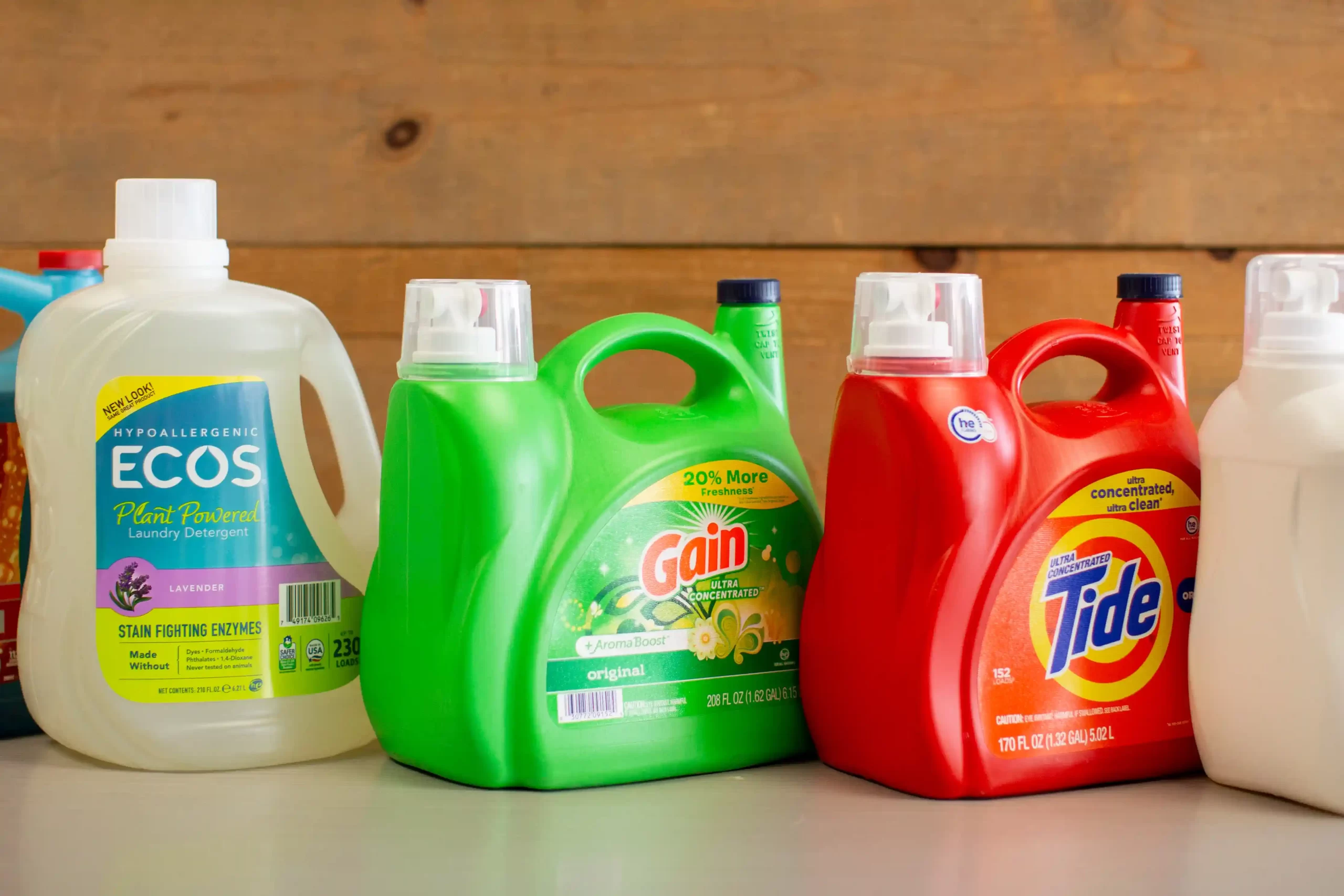
If you have ever pulled a freshly washed shirt out of the dryer and immediately started itching, you already know the problem. Standard laundry detergents are loaded with chemicals that irritate sensitive skin, fragrances, dyes, optical brighteners, and preservatives that have no business being anywhere near your clothes.
For the estimated 31 million Americans living with eczema, and millions more with contact dermatitis, chemical sensitivity, or infant skin concerns, regular laundry is a genuine health issue. It is not about preference. It is about avoiding the substances that cause rashes, flares, and discomfort.
This guide breaks down what “hypoallergenic” actually means in laundry, which detergent ingredients to avoid, how ozone technology reduces chemical exposure, and why San Diego families with sensitive skin are switching to a professional service that gets it right.
This is not a niche concern. Hypoallergenic laundry matters for:
Who needs hypoallergenic laundry? Anyone with eczema, contact dermatitis, chemical sensitivity, allergies, or infants in the household benefits from fragrance-free, dye-free laundry practices. Approximately 50 million Americans have some form of skin sensitivity that standard laundry detergents can aggravate.
The word “hypoallergenic” is not regulated by the FDA or EPA. Any manufacturer can slap it on a label. So you need to know what to actually look for and what to avoid.
Ingredients to avoid
Irritant | What It Does | Found In |
|---|---|---|
Synthetic fragrance | Triggers eczema flares, headaches, and respiratory issues | Most mainstream detergents |
Optical brighteners | UV-reactive chemicals that stay in fabric and contact skin | Tide, Persil, most “bright whites” formulas |
Methylisothiazolinone (MI) | Preservative linked to contact dermatitis | Liquid detergents, fabric softeners |
Sodium lauryl sulfate (SLS) | Strips natural skin oils, causing irritation | Budget detergents |
Artificial dyes | Serves no cleaning purpose, can irritate the skin | Blue/green/colored detergent liquids |
Detergents that actually qualify
Not all “free and clear” products are created equal. Two stand out based on ingredient transparency and third-party testing:
All Free & Clear: No fragrances, no dyes, no irritating residues. It is the #1 detergent recommended by dermatologists and the only major brand with the National Eczema Association Seal of Acceptance.
Seventh Generation Free & Clear: Plant-based surfactants, no synthetic fragrances, no dyes, no optical brighteners. USDA BioPreferred certified. A strong choice for families who want both hypoallergenic and environmentally responsible products.
At Freshly Folded, we stock both of these as standard options alongside Tide, Gain, and Persil. You choose your detergent when you schedule a pickup, and we never mix loads between customers; your clothes are washed separately with exactly what you selected.
Even if you buy the right detergent, other parts of your laundry routine might be causing problems.
Fabric softener
Fabric softener is one of the worst offenders for sensitive skin. It works by coating fabric fibers with a thin layer of chemicals (often quaternary ammonium compounds) that make clothes feel softer. That coating sits directly against your skin all day. If you have eczema or contact dermatitis, stop using fabric softener entirely. Dryer balls achieve the same anti-static effect without chemicals.
Dryer sheets
Same problem as fabric softener, in sheet form. The fragrance load in a single dryer sheet can trigger reactions in chemically sensitive individuals even after multiple subsequent washes.
Too much detergent
Overloading detergent is surprisingly common and especially problematic for sensitive skin. Excess detergent does not rinse out fully, leaving irritating residue in fabric fibers. Use the recommended amount, or slightly less. Your clothes will still get clean.
Washing machine residue
If you have been using fragranced detergent for years, your washing machine drum has a buildup of fragrance chemicals, softener residue, and detergent film. Run two empty hot cycles with white vinegar before switching to hypoallergenic detergent. This is something most people skip, and it undermines the entire switch.
This is where things get interesting for sensitive skin families.
What is ozone laundry sanitization? Ozone (O3) is a naturally occurring oxidizer that kills 99.9% of bacteria, breaks down allergens, and sanitizes fabric without heat or heavy chemical loads. In an ozone laundry system, O3 is infused directly into the wash water, where it destroys organic compounds on contact and then reverts to regular oxygen (O2), leaving zero chemical residue on clothing.
Traditional laundry relies on three things to get clothes clean: hot water, mechanical agitation, and chemical detergent. Ozone adds a fourth factor, oxidation, that does much of the heavy lifting on its own. The practical result:
Every load at Freshly Folded runs through our ArtiClean ozone sanitization system as standard. There is no upcharge. Whether you are washing baby clothes, eczema-sensitive bedding, or everyday wear, ozone sanitization is included with your wash and fold service.
Doing hypoallergenic laundry right at home is doable, but it is more work than most people realize. You need to:
For a family with a baby and a parent with eczema, that is a lot of extra steps on top of an already time-consuming chore.
A professional hypoallergenic service handles all of it. At Freshly Folded, here is what the process looks like:
Pricing starts at $2.49 per pound for weekly subscribers, with a $49.99 minimum order and $5.99 transport fee. For families doing 3-4 loads per week of hypoallergenic laundry, the cost is comparable to buying specialty detergent and running extra rinse cycles at home, without any of the labor.
If you just brought a baby home and you are staring at a mountain of onesies, swaddles, and burp cloths, here is the short version: wash everything in fragrance-free, dye-free detergent, skip the fabric softener, and run an extra rinse cycle. Or hand it to us.
We handle a lot of newborn laundry. Parents like knowing that every load is ozone-sanitized (kills bacteria without chemicals), washed in the detergent they chose, and never mixed with anyone else’s clothes. One less thing to worry about during those first few months.
Schedule a pickup and tell us it is baby laundry, and we will take it from there.
What makes a laundry detergent truly hypoallergenic?
A truly hypoallergenic laundry detergent is free of synthetic fragrances, dyes, optical brighteners, and common irritants like methylisothiazolinone. Look for products certified by the National Eczema Association or dermatologist-tested labels. All Free & Clear and Seventh Generation Free & Clear are two widely recommended options.
Is ozone laundry safe for sensitive skin?
Yes. Ozone laundry is considered safer for sensitive skin than traditional hot-water washing with heavy detergent. Ozone (O3) is a natural oxidizer that kills bacteria, breaks down allergens, and sanitizes fabric using less detergent and lower water temperatures. It leaves no chemical residue on clothing, making it an excellent option for people with eczema or chemical sensitivities.
Can I choose my detergent with Freshly Folded?
Yes. Freshly Folded offers five detergent options: Tide, Gain, All Free & Clear, Seventh Generation Free & Clear, and Persil. Customers with sensitive skin or allergies typically choose All Free & Clear or Seventh Generation, both of which are fragrance-free and dye-free.
What laundry detergent do dermatologists recommend for eczema?
Dermatologists generally recommend fragrance-free, dye-free detergents for eczema patients. All Free & Clear is the most commonly recommended brand, followed by Seventh Generation Free & Clear. Both are free of the top irritants that trigger eczema flares: synthetic fragrance, optical brighteners, and dyes.
Does Freshly Folded separate hypoallergenic loads from regular loads?
Yes. Each customer’s laundry is washed as its own separate load with the detergent they selected. Freshly Folded never combines different customers’ clothing in the same machine cycle, so there is no risk of cross-contamination with fragranced detergents.